

Enhancing Structural Integrity: The Critical Role of Fiber for Concrete Reinforcement
Concrete is arguably the most widely used construction material in the world, forming the backbone of modern infrastructure from skyscrapers to highways. However, traditional plain concrete has a significant inherent weakness: while it possesses high compressive strength, it is brittle and has very low tensile strength. To overcome this limitation, engineers and material scientists have increasingly turned to advanced composite materials. Among the most effective solutions is the use of fiber for concrete reinforcement. This technology involves dispersing discrete, short fibers throughout the concrete matrix to improve its mechanical properties, durability, and overall performance.
The concept of reinforcing brittle materials with fibers is not new; historically, straw was used to reinforce mud bricks. However, modern engineering has refined this approach significantly. Today, the inclusion of fiber for concrete reinforcement is a sophisticated science that addresses specific structural challenges. These fibers act as a secondary reinforcement system, bridging micro-cracks that form during the curing process and macro-cracks that develop under loading. By holding the concrete together even after it has cracked, these fibers transform a brittle material into one that exhibits ductile behavior and energy absorption capabilities.
There are several types of fibers available on the market, each offering distinct advantages depending on the application. Steel fibers are perhaps the most common type of fiber for concrete reinforcement in heavy-duty industrial applications. Typically made from low-carbon steel, these fibers provide significant improvements in flexural strength, impact resistance, and fatigue life. They are extensively used in industrial flooring, tunnel linings, and shotcrete applications. The hook-ended or crimped geometry of steel fibers ensures a strong mechanical bond with the cement paste, allowing for efficient stress transfer across cracks.
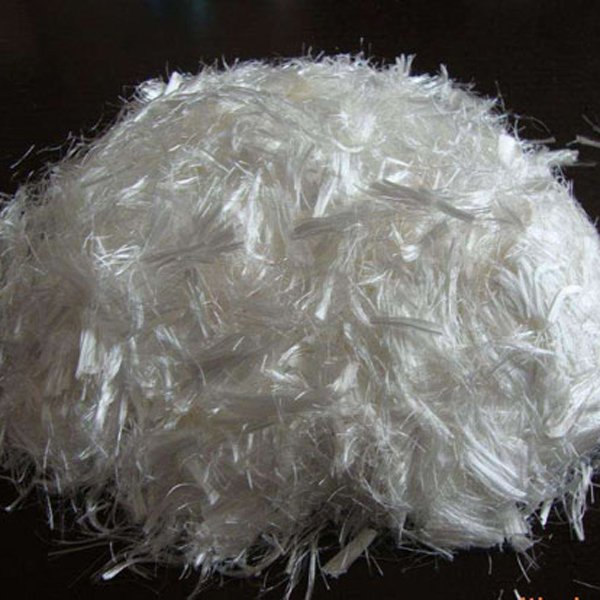
In contrast, synthetic fibers such as polypropylene, nylon, and polyester are widely used for controlling plastic shrinkage cracking. When concrete is first poured, it is in a plastic state and prone to shrinking as water evaporates from the surface. This shrinkage can lead to early-age cracking, which compromises the durability of the structure. Adding a specific type of fiber for concrete reinforcement, such as microfibrillated polypropylene, creates a three-dimensional support system within the mix. This network holds the concrete together during the critical setting phase, significantly reducing the width and frequency of plastic shrinkage cracks.
Another innovative category includes macro-synthetic fibers, which are engineered to provide structural capacity similar to steel fibers but with the added benefit of being corrosion-resistant. This makes them an ideal choice for fiber for concrete reinforcement in aggressive environments, such as marine structures, wastewater treatment plants, or bridge decks exposed to de-icing salts. Unlike steel, these high-performance polymers do not rust, thereby eliminating the risk of spalling caused by the expansion of corroding metal.
Beyond the material composition, the effectiveness of fiber for concrete reinforcement depends heavily on the aspect ratio (length to diameter) and the dosage of the fibers. A higher aspect ratio generally provides better bonding and reinforcement efficiency, but if the fibers are too long, they may ball up during mixing, leading to poor workability. Conversely, if the dosage is too high, the concrete mix can become harsh and difficult to place. Therefore, finding the optimal balance is crucial for maximizing the benefits of fiber for concrete reinforcement without compromising the constructability of the concrete.
The benefits of using fibers extend beyond just mechanical strength. One of the most significant advantages is the potential for cost savings and construction speed. In many applications, such as warehouse floors or shotcrete linings, the use of fiber for concrete reinforcement can partially or completely replace traditional welded wire mesh or rebar. This eliminates the time-consuming process of installing steel cages, reducing labor costs and accelerating project timelines. Furthermore, fibers are distributed randomly and uniformly throughout the volume of the concrete, providing isotropic reinforcement that is effective in all directions, unlike rebar which only reinforces along its axis.
Durability is another critical factor where fiber technology shines. Concrete structures are constantly subjected to environmental attacks, including freeze-thaw cycles, chemical exposure, and abrasion. The inclusion of fiber for concrete reinforcement enhances the toughness of the matrix, allowing it to withstand these stresses with less degradation. For instance, in pavements subjected to heavy traffic, fiber-reinforced concrete exhibits superior resistance to raveling and surface wear, leading to a longer service life and reduced maintenance requirements.
Despite these advantages, the adoption of fiber technology requires careful quality control. The mixing process must be monitored to ensure that the fibers are properly dispersed and not clumped. Additionally, the finish of fiber-reinforced concrete, particularly with steel fibers, can sometimes be challenging if the fibers protrude from the surface. However, advancements in fiber manufacturing and mix design have largely mitigated these issues, making fiber for concrete reinforcement a reliable and mainstream choice for modern construction.
In conclusion, the evolution of construction materials has brought fiber for concrete reinforcement to the forefront of civil engineering. Whether through the high tensile strength of steel, the shrinkage control of polypropylene, or the corrosion resistance of macro-synthetics, fibers offer a versatile solution to the limitations of plain concrete. As infrastructure demands grow and sustainability becomes a priority, the ability to build thinner, stronger, and longer-lasting structures using fiber for concrete reinforcement will continue to shape the future of the built environment. The integration of these materials represents not just an improvement in material science, but a fundamental shift towards more resilient and efficient construction practices.