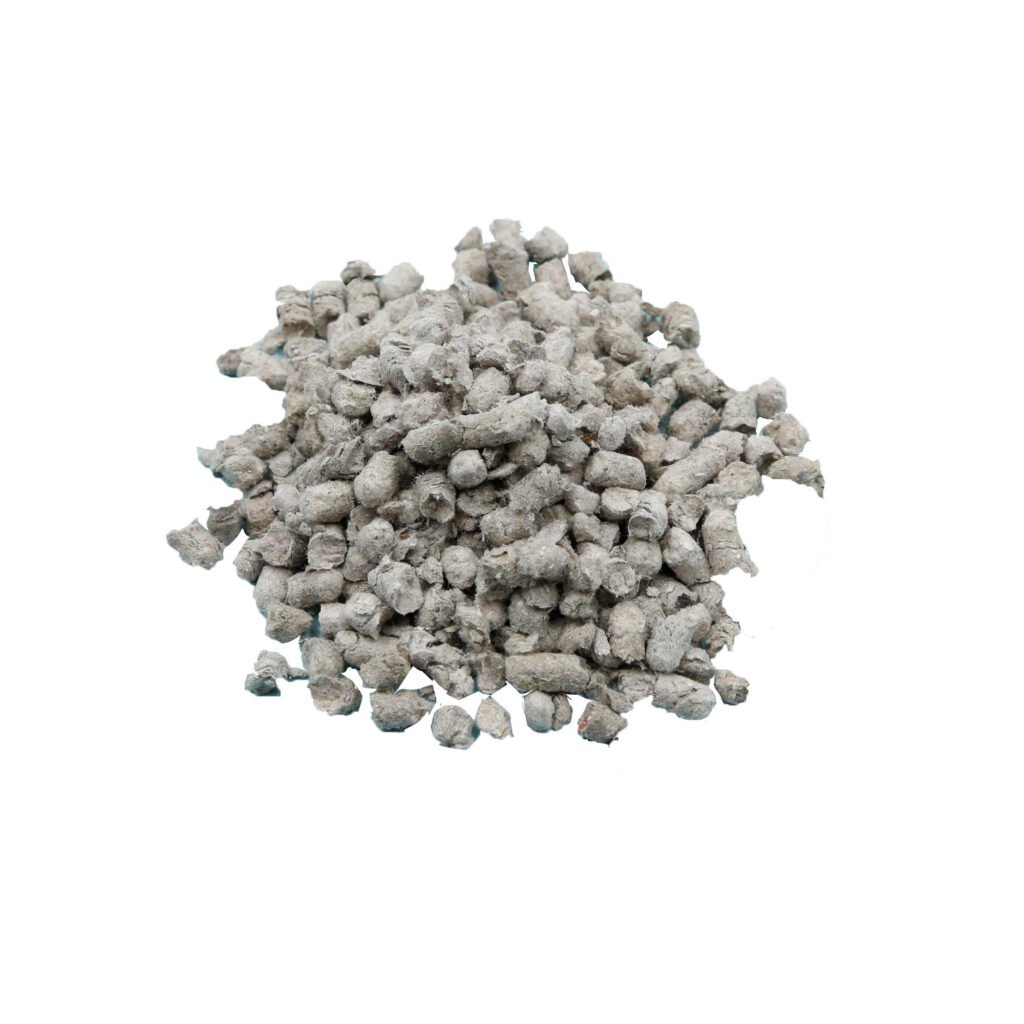


In modern road engineering, lignocellulose has become an indispensable modified material for asphalt mixtures, pavement bases, and waterproof road layers. As a natural polymer fiber extracted from plant tissues, lignocellulose can significantly improve the stability, durability, and high-temperature resistance of road structures. With the rapid development of green infrastructure and sustainable highway construction, the application of lignocellulose in road projects is expanding rapidly. This article systematically introduces the main types of lignocellulose for road use and their core physical, chemical, and mechanical characteristics, providing a practical reference for road designers, constructors, and material suppliers.
What is Road-Use Lignocellulose?
Road-use lignocellulose is a kind of natural organic fiber material composed of cellulose, hemicellulose, and lignin. It is processed from plant raw materials through crushing, screening, purification, and surface modification. Unlike ordinary industrial fibers, road lignocellulose must meet strict standards for road performance, including thermal stability, water absorption, dispersion, and compatibility with asphalt and mineral aggregates.
By adding lignocellulose to asphalt mixtures, the material can absorb asphalt, increase cohesion, reduce drainage and segregation, and enhance the overall anti-rutting and anti-cracking performance of the pavement. It is widely used in high-grade highways, bridge deck pavements, tunnel pavements, and heavy-load traffic road sections.
Main Types of Lignocellulose for Road Construction
Different raw materials and production processes lead to different types of road lignocellulose, each with unique application advantages. The following are the three most commonly used categories in road engineering.
- Wood Lignocellulose
Wood lignocellulose is the most widely used road fiber, mainly made from coniferous and broad-leaved wood residues. It has high cellulose content, uniform fiber length, and excellent mechanical strength.
According to processing technology, it can be divided into granular lignocellulose and flocculent lignocellulose. Granular products are easy to transport, store, and meter, making them suitable for automated mixing stations. Flocculent products have better dispersion and asphalt wrapping effect, often used in high-performance modified asphalt mixtures.
Wood lignocellulose features stable performance, strong high-temperature resistance, and good compatibility with asphalt, making it the preferred fiber for SMA (Stone Mastic Asphalt) mixtures.
- Straw Lignocellulose
Straw lignocellulose is processed from crop straws such as wheat straw, rice straw, and corn stalk. It belongs to renewable environmental protection materials and has obvious economic and ecological benefits.
Although its strength and thermal stability are slightly lower than wood lignocellulose, it fully meets the requirements of conventional road bases, low-grade road surfaces, and waterproof layers. With the promotion of recycled building materials, straw lignocellulose is increasingly used in rural highway construction and pavement rehabilitation projects.
- Modified Lignocellulose for Special Roads
Modified lignocellulose refers to products treated by surface hydrophobic modification, high-temperature activation, or chemical cross-linking. It is specially used in heavy-load roads, long-life pavements, and extreme climate areas.
This type of fiber has stronger anti-aging ability, higher asphalt adsorption rate, and better dispersion in harsh environments. It is often used in expressways, airport runways, and coastal high-temperature and high-humidity road sections.
Core Characteristics of Road-Use Lignocellulose
The performance of lignocellulose directly determines the service life and quality of the road. The key characteristics required by road engineering are as follows.
- High Thermal Stability
Road pavement needs to withstand long-term solar radiation and high-temperature environment in summer. Lignocellulose for road use must maintain fiber integrity at 180℃–220℃ without melting, decomposition, or carbonization. Excellent thermal stability ensures that the fiber can still play a reinforcing role in the hot mixing and paving process of asphalt mixtures.
- Strong Asphalt Adsorption and Retention
One of the most important functions of lignocellulose is to absorb and fix asphalt, forming a stable three-dimensional network structure inside the mixture. This characteristic can effectively prevent asphalt flow at high temperatures, reduce rutting deformation, and improve the high-temperature stability of the pavement.
- Good Dispersion and Uniformity
Qualified road lignocellulose can be quickly and evenly dispersed in the mixing process without agglomeration or clustering. Uniform fiber distribution helps to improve the overall strength of the mixture and avoid local structural defects caused by fiber accumulation.
- High Tensile Strength and Toughness
Lignocellulose acts as a “micro-reinforcement” in the road material. High tensile strength and toughness can inhibit the generation and expansion of reflection cracks and temperature shrinkage cracks, greatly improving the anti-cracking performance and fatigue resistance of the pavement.
- Hydrophobicity and Waterproof Performance
Professional road lignocellulose has low water absorption or is treated with hydrophobic modification. It can prevent moisture from entering the interior of the pavement structure, reduce the damage of water damage, freeze-thaw cycle, and spalling, and extend the service life of the road.
- Environmental Protection and Durability
As a natural plant fiber, lignocellulose is non-toxic, pollution-free, and compatible with the ecological environment. It does not release harmful substances during construction and use, meeting the requirements of green highway construction. Meanwhile, it has strong anti-aging and anti-corrosion properties, maintaining long-term effectiveness in the road structure.
Application Advantages of Lignocellulose in Road Engineering
In practical road projects, lignocellulose brings significant improvements to pavement performance:
- Improve high-temperature rutting resistance of asphalt pavement
- Enhance low-temperature crack resistance and fatigue life
- Reduce asphalt dosage and project cost
- Improve workability and construction stability of mixtures
- Extend road service life and reduce maintenance frequency
It is particularly suitable for heavy traffic roads, long-span bridge decks, tunnel pavements, and areas with large temperature differences.