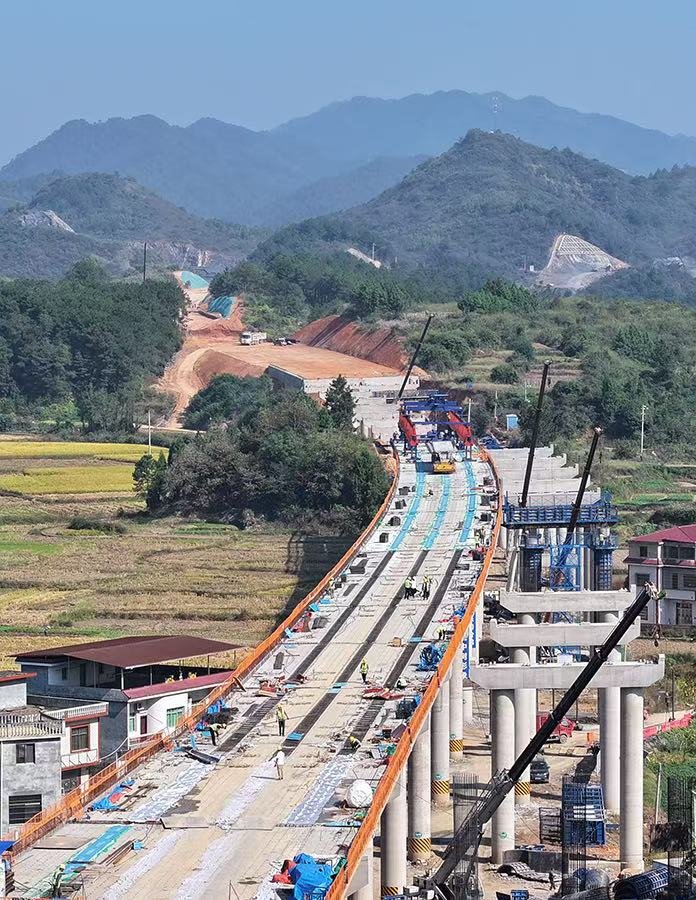


Fiber for Concrete Reinforcement: The Unsung Hero of China’s High-Speed Highway Expansion
China’s highway network stands as a monumental testament to modern engineering prowess. Spanning over 180,000 kilometers of expressways, this vast infrastructure serves as the backbone of the nation’s economy, facilitating the movement of goods and people at an unprecedented scale. However, the durability and longevity of these critical arteries are under constant assault from heavy axle loads, extreme weather variations, and chemical erosion. In the quest for more resilient infrastructure, the adoption of fiber for concrete reinforcement has transitioned from an experimental additive to an indispensable component in highway construction.
The Imperative for Advanced Materials
Traditional reinforced concrete, while strong in compression, is inherently brittle and prone to cracking under tensile stress. In the context of highway pavements, these micro-cracks are not merely cosmetic flaws; they are the primary pathways for water and deicing salts to penetrate the substructure. Once moisture infiltrates, it leads to the freeze-thaw cycle degradation in northern regions and the corrosion of internal steel reinforcement, ultimately resulting in potholes, rutting, and costly maintenance closures.
The limitations of conventional rebar and welded wire mesh—susceptibility to corrosion and the inability to control plastic shrinkage cracks—necessitated a paradigm shift. This is where fiber for concrete reinforcement enters the equation. By dispersing millions of discrete fibers throughout the concrete matrix, engineers create a three-dimensional reinforcement web that arrests crack propagation at the micro-level, significantly enhancing the material’s toughness and durability.
Types of Fiber for Concrete Reinforcement in Highway Applications
The Chinese construction market utilizes a diverse range of fibers, each tailored to specific performance requirements. The selection of the appropriate fiber for concrete reinforcement is dictated by the environmental exposure and the functional demands of the highway section.
- Polypropylene Fibers: These are the most widely used synthetic fibers in China due to their cost-effectiveness and versatility. Typically used in secondary reinforcement roles, polypropylene fibers are exceptionally effective at reducing plastic shrinkage cracking. During the curing phase, when concrete is most vulnerable, these fibers prevent the formation of capillary cracks caused by water evaporation. While they do not add significant structural tensile strength, they drastically improve the concrete’s resistance to spalling during fires and enhance impact resistance against heavy traffic loads.
- Steel Fibers: For sections of highways requiring structural reinforcement, such as bridge decks, tunnels, and heavy-duty industrial yards, steel fibers are the gold standard. Unlike traditional rebar, which only reinforces in specific directions, steel fibers provide isotropic reinforcement in all directions. They significantly increase the flexural strength and fatigue resistance of the concrete. In the event of cracking, steel fibers bridge the gaps, maintaining load-bearing capacity and preventing catastrophic failure. Their use reduces the need for complex rebar cages, accelerating construction timelines.
- Macro-Synthetic Fibers: Bridging the gap between polypropylene and steel, macro-synthetic fibers (usually made from high-performance polyethylene or polypropylene) are engineered to mimic the performance of steel fibers without the risk of corrosion. These large-diameter fibers are designed to provide true structural reinforcement. They are increasingly being specified for continuously reinforced concrete pavements (CRCP) where long-term durability in aggressive chemical environments is paramount.
Technical Advantages in Pavement Performance
The integration of fiber for concrete reinforcement into highway construction offers a multifaceted improvement in pavement performance. The primary mechanism is the “fiber-bridging” effect. As a crack begins to form within the concrete, the fibers spanning the crack face exert a restraining force, transferring the stress across the fissure and limiting its width.
This results in several critical benefits:
- Crack Control and Waterproofing: By controlling crack width, fibers prevent the ingress of water. This is crucial for preventing “pumping,” a phenomenon where water and fine soil particles are ejected from beneath the slab, leading to loss of support and slab failure.
- Enhanced Durability: Fiber-reinforced concrete exhibits superior resistance to the freeze-thaw cycles that plague northern China. The fibers create a more tortuous path for water penetration and provide internal relief for the expansion of freezing water, reducing surface scaling and spalling.
- Toughness and Impact Resistance: Highways must withstand the relentless pounding of heavy trucks. Fibers increase the energy absorption capacity of concrete. This means that under impact loading, the concrete does not shatter but instead deforms plastically, absorbing the kinetic energy and maintaining integrity.
- Reduced Maintenance Costs: The lifecycle cost analysis of fiber-reinforced highways consistently shows lower maintenance expenditures. By preventing the rapid deterioration of the pavement surface, the need for frequent patching, milling, and resurfacing is deferred, keeping traffic flowing and reducing the carbon footprint of maintenance operations.
Case Studies: Implementation in Major Projects
China’s aggressive infrastructure development has provided a fertile testing ground for advanced fiber technologies. Several high-profile projects highlight the strategic application of fiber for concrete reinforcement.
The Hong Kong-Zhuhai-Macao Bridge, one of the most complex maritime crossings in the world, utilized high-performance macro-synthetic fibers in its immersed tunnel elements and artificial islands. Given the aggressive chloride-laden marine environment, the elimination of steel corrosion risk was paramount. The fibers ensured watertight integrity and prevented plastic shrinkage cracking in the massive concrete pours, which were essential for the project’s longevity.
In the Xiong’an New Area development, smart highway technologies are being deployed alongside advanced materials. Fiber-reinforced concrete is being used extensively in the underground utility tunnels (comprehensive pipe corridors). These tunnels require absolute leak-proofing to protect critical urban infrastructure. The use of polypropylene and steel fibers has minimized joint requirements and provided the necessary ductility to withstand potential ground settlement.
Sustainability and the Green Transition
As China moves toward its “dual carbon” goals (carbon peak and carbon neutrality), the construction industry is under pressure to reduce its environmental impact. Concrete production is a significant source of CO2 emissions. Fiber for concrete reinforcement plays a vital role in sustainable construction.
By enabling the use of thinner concrete sections (due to higher strength-to-weight ratios) and by drastically extending the service life of structures, fibers reduce the overall volume of concrete required over time. Furthermore, the reduction in maintenance activities translates to fewer construction vehicles on the road, lower fuel consumption, and less disruption to traffic flow.
Research is also advancing in the use of recycled materials for fiber production. Some Chinese manufacturers are now producing fibers from post-consumer plastics, creating a circular economy loop where waste is transformed into a high-value construction material that further enhances the sustainability of highway infrastructure.
Future Outlook and Innovation
The future of highway construction in China is inextricably linked to material science innovation. The current trend is moving toward hybrid fiber systems, where two or more types of fibers are combined to create a “synergistic effect.” For instance, combining micro-steel fibers with macro-synthetic fibers can optimize both crack control and structural toughness simultaneously.
Moreover, the advent of “smart fibers” is on the horizon. Researchers are experimenting with fibers embedded with sensors that can monitor strain, temperature, and corrosion within the concrete in real-time. This data can be fed into digital twins of the highway infrastructure, allowing for predictive maintenance and ensuring that China’s highways remain safe and operational for decades to come.
In conclusion, fiber for concrete reinforcement is no longer a supplementary additive but a fundamental element in the DNA of China’s modern highway network. It represents the fusion of material science and civil engineering, ensuring that the roads of the future are not just built faster, but built better, stronger, and greener.