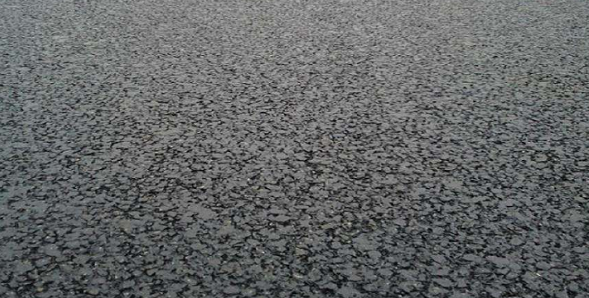


Lignocellulose, serving as a stabilizer for Stone Matrix Asphalt (SMA) and fiber-reinforced asphalt concrete pavements, has been widely used in China for more than ten years. Particularly with the extensive application of SMA pavements in the construction and reconstruction of expressways across the country, lignocellulose has become a routinely used material in pavement engineering. However, as the consumption of lignocellulose continues to rise, significant discrepancies in product quality and price have emerged in the market. In some cases, the use of substandard products has directly led to quality problems in newly built and renovated pavement projects, which has aroused widespread concern among employers and construction enterprises.
Lignocellulose plays a vital role in the formation of Stone Matrix Asphalt (SMA) mixtures. It is well known that the asphalt-aggregate ratio of SMA is considerably higher than that of conventional asphalt mixtures. A large portion of the increased asphalt content is adsorbed and stabilized by lignocellulose. This requires a clear understanding of the properties of road-grade lignocellulose and its mechanism in asphalt mixture production. Road lignocellulose is essentially composed of lignin and cellulose. Among these components, cellulose is mainly responsible for asphalt adsorption in the mixing process. In other words, the cellulose content determines the fundamental quality of road lignocellulose. Since the price of cellulose is much higher than that of lignin, this cost difference has become the primary cause of the chaotic pricing in the current road lignocellulose market.
It is natural and reasonable for ordinary purchasers to prefer low-priced products. Nevertheless, in the road lignocellulose market, price differences of more than one thousand yuan per ton between different products are unreasonable. The root cause lies in the raw materials used for production. At present, the market is flooded with a large number of products made from low-grade lignin-based materials, including a considerable amount of waste textile fibers and grass fibers with extremely low cellulose content. These cheap raw materials cost far less than qualified raw materials—often with a price gap exceeding one thousand yuan. This is essentially an act of passing off inferior products as qualified ones. It has caused severe price disorder in the road lignocellulose market, raised widespread doubts in the industry, and eventually resulted in numerous engineering quality problems.
The production and application of such inferior products peaked two years ago. Soon afterward, various application problems emerged successively in projects nationwide. As a result, employers and construction units have become more vigilant and strengthened supervision over material quality. Since last year, the market situation has improved rapidly as stricter quality management has been implemented.
Experts in the industry frequently mention the term “heat loss rate”. Many people may not fully understand its most harmful effect. When road lignocellulose is applied in SMA pavements, it is usually used together with modified asphalt according to domestic engineering practices. Under such conditions, the mineral aggregate is typically heated to 190℃–200℃. To avoid carbonization or burning out at such high temperatures, road lignocellulose must be specially treated for high-temperature resistance. The national standard requires that no obvious carbonization occurs after 2 hours at 210℃.
To achieve this high-temperature resistance, qualified products are usually coated with silicon dioxide powder with a fineness of more than 350 meshes. This treatment ensures that the oil absorption rate measured in the laboratory (cold oil absorption rate) is close to or consistent with the actual oil absorption rate under real production conditions (hot oil absorption rate). In this way, the designed asphalt content can be guaranteed, and the expected performance and quality of the pavement can be achieved. Unfortunately, some unqualified manufacturers replace the high-quality silica powder with ordinary mineral powder of about 100 meshes to reduce costs. This substitution in material and fineness directly leads to the carbonization of lignocellulose at high temperatures, reduces the actual asphalt content below the design requirement, and triggers a series of pavement quality defects.
Excessive ash content is another common trick used by unscrupulous suppliers. The national standard specifies that the ash content of road lignocellulose should be 18% ± 5%. However, construction teams have discovered products with ash content as high as 40% to 50% on multiple construction sites. Excessive mineral powder greatly increases the product weight, meaning that construction units often pay high prices for materials that are mostly ordinary mineral powder rather than effective lignocellulose.
It is worth noting that such irregularities once showed a tendency to spread in the lignocellulose industry. Fortunately, the industry has now realized the seriousness of these problems. Material selection, inspection, and supervision are becoming increasingly standardized. With strengthened quality management and stricter law enforcement, the market will gradually return to a healthy and orderly development track, providing reliable material support for the long-term performance and durability of asphalt pavements.