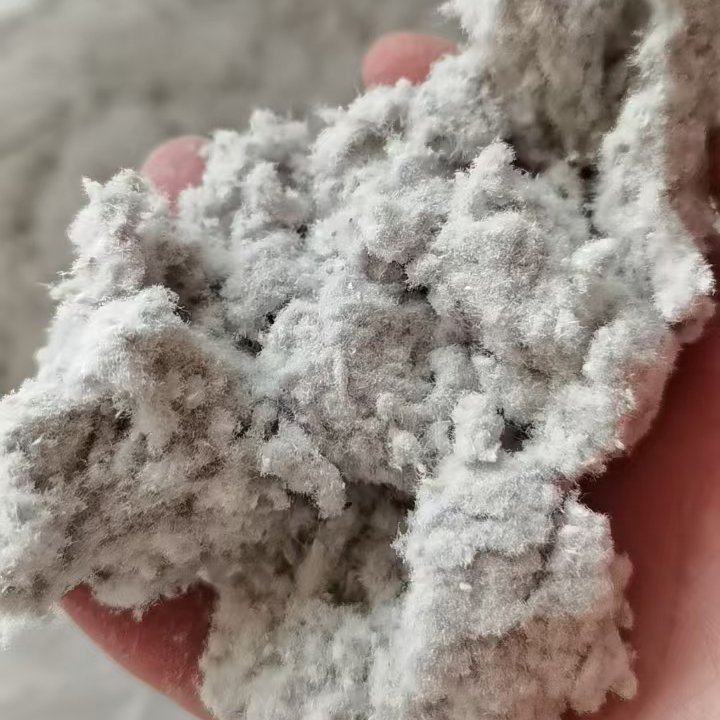


Asphalt Fiber in 2026: From Road Reinforcement to a New Material Frontier
The global road network is aging faster than budgets can repair it, and the pressure to build longer-lasting, lower-carbon pavements has pushed asphalt fiber from a niche additive into a mainstream engineering solution. In 2026, the sector is no longer defined only by polymer or cellulose fibers mixed into asphalt mixtures. It is also being reshaped by new standards, bio-based materials, waste-derived fibers, and the rising commercialization of asphalt-based carbon fiber for high-temperature industrial applications. Together, these developments show that asphalt fiber is entering a more diversified, standards-driven, and internationally competitive phase.
Market analysts estimated the global asphalt fiber market at about 3.93 billion U.S. dollars in 2023, with expectations to grow toward 7.2 billion U.S. dollars by 2032 at a compound annual growth rate of roughly 6.97 percent. The expansion is being driven by demand for more durable pavements, heavier traffic loads, and the need to reduce lifecycle maintenance costs. Fiber-reinforced asphalt mixtures are increasingly used on highways, urban roads, airport runways, and port terminals because they can improve resistance to cracking, rutting, fatigue damage, and moisture-related distress. However, growth is not occurring in a vacuum. Petrochemical supply volatility, environmental regulations, and the push for circular materials are all changing which fibers are chosen, how they are produced, and where they can be applied.
One of the most important developments in 2026 is the formalization of technical standards. China’s Ministry of Transport released the Technical Specifications for Application of Fiber Materials in Highway Pavements (JTG/T 3682—2026), which began implementation on August 1, 2026. The standard provides a unified framework for fiber materials used in highway construction and maintenance, helping engineers move beyond informal or project-specific practices. At the provincial level, Shandong also advanced fiber pavement technology. Qingdao’s helped lead the development of the local standard Technical Specifications for Design and Construction of Flocculent Basalt Fiber Asphalt Mixture (DB37/T 6070—2026), which was approved in August 2026 and implemented in September 2026. For a city such as Rizhao, where coastal climate, heavy freight traffic, and seasonal temperature changes can accelerate pavement deterioration, standardized fiber-reinforced asphalt mixtures offer a practical way to extend service life while reducing repeated repairs.
Basalt fiber has become one of the most visible contributors to this trend. As an inorganic mineral fiber, it is resistant to high temperatures, corrosion, and aging, making it suitable for asphalt concrete that must withstand summer heat, winter contraction, and repeated vehicle loading. Research and engineering applications have shown that basalt fiber can improve high-temperature stability, low-temperature crack resistance, and fatigue performance in asphalt mixtures. In Henan, basalt fiber asphalt pavement technology was highlighted at the 2026 Provincial Transportation Science and Technology Innovation Conference, where it was presented as part of a broader shift toward long-life green roads. The technology has been applied in municipal and highway projects, with reported improvements in pavement durability and reductions in structural thickness compared with conventional designs. While such figures depend on local materials, traffic conditions, and design methods, they reflect a wider industry belief that fiber reinforcement can help transform preventive maintenance into a more systematic engineering practice.
At the same time, sustainability is pushing asphalt fiber innovation beyond traditional synthetic polymers. In August 2026, a bio-based polyamide fiber composite sealing layer and an asphalt crack-repair system were applied on the Yushen Expressway in Shaanxi. The bio-based fiber, derived from renewable biomass, was used to enhance crack resistance, water sealing, and skid resistance in a preventive maintenance project. The asphalt毯 system, incorporating a high-toughness bio-based fiber base layer, enabled rapid, self-adhesive crack repair without heating, reducing traffic disruption. These applications show that fiber technology is no longer limited to large-scale mixing plants. It is also entering fast, low-disturbance maintenance methods that suit busy expressways and urban roads.
Waste-derived fibers are adding another dimension to the field. Researchers have developed slag fiber-reinforced asphalt mixtures using surface-modified fibers produced from industrial solid waste. Laboratory and field evaluations indicated that modified slag fibers improved interfacial adhesion with asphalt and enhanced tensile strength, dynamic stability, and low-temperature performance. In parallel, South Dakota State University researchers have explored cellulose fibers from agricultural and forest residues as renewable modifiers for asphalt mixtures, aiming to reduce reliance on petroleum-based binders while improving mechanical performance. These directions are especially relevant because road agencies are under growing pressure to cut carbon emissions, reuse industrial byproducts, and justify higher upfront material costs through longer pavement life.
Another notable development in 2026 concerns asphalt-based carbon fiber, which should not be confused with fiber added directly into road asphalt mixtures. Asphalt-based carbon fiber is produced from petroleum or coal-tar asphalt precursors and is valued for its high temperature resistance, low ash content, and thermal insulation properties. Chinese company Xinde New Material reported progress in mass-producing asphalt-based carbon fiber, with products entering verification and small-batch supply in optical fiber, photovoltaic, semiconductor, and heat-treatment fields. Analysts have pointed out that overseas producers have not significantly expanded capacity in recent years, creating a potential window for domestic substitution. Although this material is mainly aimed at high-end thermal insulation and industrial applications rather than highway paving, its emergence strengthens the broader narrative around asphalt-derived advanced fibers. It also demonstrates how asphalt-related feedstocks can move beyond conventional road construction into strategic manufacturing sectors.
Despite these advances, the asphalt fiber industry still faces real constraints. Fiber dispersion, interface bonding, production consistency, and construction quality control remain critical. If fibers are not evenly distributed in the mixture, or if the bond between fiber and asphalt is weak, performance gains can be limited. Environmental compliance is also becoming stricter, especially for materials involving chemical modification, high-temperature processing, or complex supply chains. In addition, Middle East geopolitical tensions have periodically disrupted petrochemical feedstock flows in 2026, affecting polymers and related additives used in road materials. Such volatility makes locally available, recycled, or bio-based fibers more attractive, particularly for public projects that must balance performance with price stability.
Looking ahead, the most successful applications of asphalt fiber will likely combine three elements: standardized design, verified field performance, and clear lifecycle cost advantages. Engineers will not adopt fiber reinforcement simply because it is new; they will adopt it when standards specify how to use it, contractors know how to construct it, and asset owners can measure fewer cracks, less rutting, and longer intervals between major repairs. Digital inspection tools, predictive maintenance models, and perpetual pavement concepts are also creating stronger demand for materials that can delay structural failure rather than merely patch surface damage.
In 2026, asphalt fiber is no longer just a modifier hidden inside a mixing plant. It is becoming a visible part of the transition toward greener, smarter, and longer-lasting infrastructure. From basalt fiber highways in China to bio-based sealing layers, slag fiber research, cellulose modifiers, and asphalt-based carbon fiber commercialization, the field is expanding in multiple directions. The common thread is the same: fiber reinforcement is helping asphalt pavements carry heavier loads, survive harsher climates, and last longer with fewer repairs. For road owners, material suppliers, and engineering teams, the question is no longer whether fiber has a role in modern asphalt design, but how quickly standards, supply chains, and construction practices can catch up with its potential.