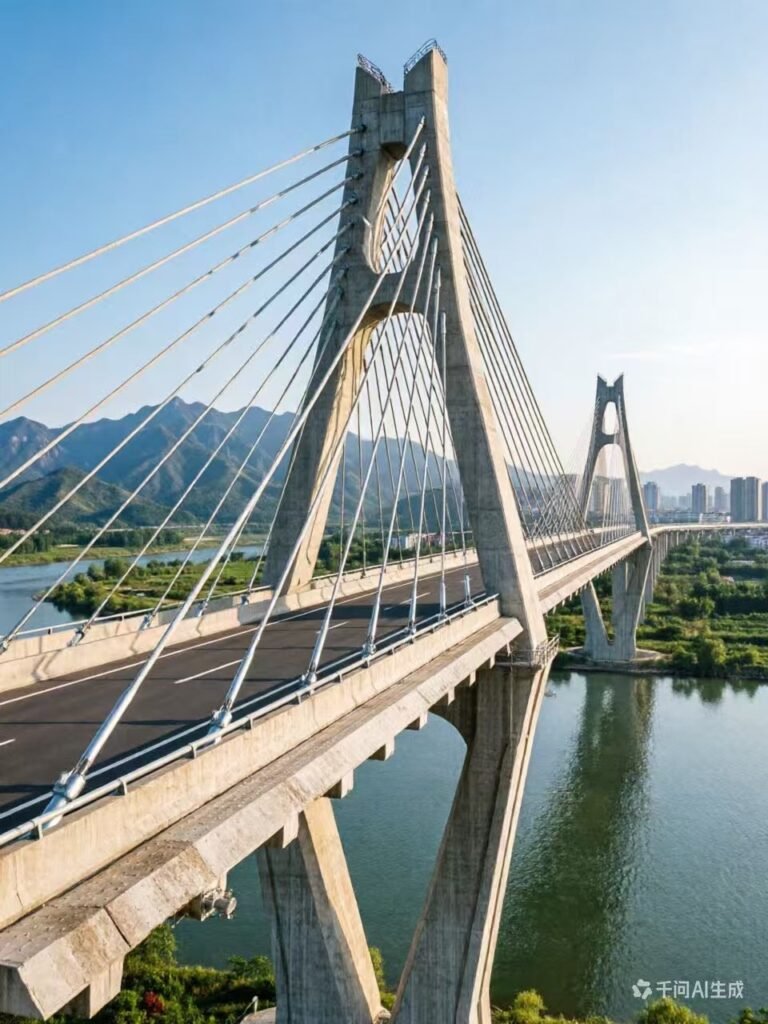


Bridging the Future: How Fiber Reinforcement is Reshaping China’s Global Infrastructure Legacy
In the annals of modern infrastructure, the bridge stands as the ultimate symbol of connection—spanning not just physical chasms of water and terrain, but bridging economies, cultures, and communities. As China continues to extend its reach through the Belt and Road Initiative (BRI) and various foreign aid programs, a quiet revolution is taking place in the very materials used to construct these marvels. While the sweeping arches and towering pylons capture the public’s imagination, the true innovation lies in the microscopic. The widespread adoption of fiber reinforcement for concrete is rapidly becoming the hallmark of Chinese overseas construction, signaling a shift from merely building structures to engineering longevity.
For decades, the narrative of Chinese construction was defined by speed and scale. However, as projects extend into the geologically complex and climatically aggressive environments of Southeast Asia, Africa, and South America, the metric of success has evolved. It is no longer just about how fast a bridge can be erected, but how long it can endure. This is where fiber reinforcement for concrete transitions from a technical specification to a strategic necessity. By integrating high-performance fibers—ranging from steel to basalt and polymers—into the concrete matrix, Chinese engineers are effectively “immunizing” these structures against the ravages of time, corrosion, and seismic activity.
The Material Evolution: Beyond the Brittle Norm
Traditional concrete, while strong in compression, is notoriously brittle and weak in tension. In the harsh environments where many aid projects are located—such as the salt-laden air of coastal Africa or the freeze-thaw cycles of Central Asia—this brittleness leads to micro-cracking. These cracks allow moisture and chlorides to penetrate, corroding the steel rebar and compromising the structural integrity within years rather than decades.
The integration of fiber reinforcement for concrete addresses this fundamental flaw. In recent projects, such as those involving the Fangcheng-Tanghe expressway and other international counterparts, the use of steel-PVA (polyvinyl alcohol) hybrid fibers has shown remarkable results. This multi-scale reinforcement creates a “synergistic effect.” The macro-fibers bridge large cracks, while the micro-fibers arrest the propagation of micro-cracks. This results in a material that is not only stronger but significantly more ductile, capable of bending without breaking—a crucial trait for bridges facing heavy dynamic loads or seismic shifts.
Moreover, the deployment of Ultra-High Performance Concrete (UHPC) reinforced with these fibers is setting new standards. UHPC, often described as a “super-concrete,” relies on a dense matrix and fiber reinforcement to achieve compressive strengths far exceeding traditional mixes. When Chinese engineering teams deploy UHPC for bridge decks and joints, they are essentially eliminating the maintenance headaches that plague older infrastructure. The fibers act as a secondary reinforcement system, ensuring that even if the primary steel is threatened by environmental factors, the concrete itself maintains its cohesion.
Green Innovation: The Rise of Basalt and FRP
A particularly compelling aspect of this material shift is the move toward sustainability and non-corrosive solutions. In regions where the preservation of the natural environment is as critical as the infrastructure itself, traditional steel reinforcement can be a liability due to its carbon footprint and susceptibility to rust.
Here, the innovation of Basalt Fiber Reinforced Polymer (BFRP) stands out. Sourced from volcanic rock, basalt fiber is an environmentally friendly material that offers exceptional resistance to alkali and corrosion. Chinese research institutions and construction firms have been pioneering the use of BFRP in combination with concrete for bridge components. Unlike steel, BFRP does not rust, making it the ideal candidate for bridges in marine environments or areas with acidic soil.
The application of BFRP and Glass Fiber Reinforced Polymer (GFRP) goes beyond simple rebar replacement. We are seeing the development of composite structures where FRP grids serve as the web of the beam, drastically reducing the self-weight of the bridge while maintaining high shear resistance. This “lightweighting” of infrastructure is a game-changer for aid projects in remote areas. It reduces the load on foundations, allows for the use of smaller cranes and transport vehicles, and accelerates the construction timeline. By utilizing these advanced composites, Chinese aid projects are demonstrating that high-tech engineering can be both durable and ecologically responsible.
Structural Synergy: The Interface of Bond and Trust
The efficacy of fiber reinforcement for concrete lies not just in the materials, but in the bond. The interface between the fiber and the cement matrix is where the physics of durability plays out. Recent studies and field applications have focused heavily on optimizing this bond strength. For instance, the use of helically ribbed GFRP bars embedded in UHPC has been shown to significantly increase bond strength, ensuring that the reinforcement and the concrete act as a unified whole under stress.
This technical precision translates into real-world safety. In the context of a bridge in a developing nation, this synergy means resilience. It means that when a heavy transport truck crosses a bridge in a remote province, or when a monsoon strikes a coastal span, the structure has the internal tensile strength to absorb the energy. The “crack arrest” capability of these fibers prevents catastrophic failure modes. It transforms a brittle structure into a ductile one that provides warning before failure, a critical safety feature for public infrastructure.
The Long-Term Vision: From Construction to Legacy
The shift toward fiber-reinforced solutions in Chinese foreign aid projects reflects a broader philosophical change in international development. It moves away from the “build-and-transfer” model toward a “build-and-sustain” paradigm. By utilizing materials that resist corrosion and fatigue, China is reducing the long-term maintenance burden on the recipient countries.
Consider the implications for a developing economy. A bridge that requires repainting and patching every five years is a financial drain. A bridge built with fiber-reinforced concrete and FRP composites might go decades with minimal intervention. This is the ultimate form of aid: infrastructure that pays dividends for generations. It aligns with the concept of “green and low-carbon development,” ensuring that the infrastructure of tomorrow does not become the waste of the day after.
Furthermore, the export of these technologies fosters technical cooperation. It introduces local engineering workforces to advanced material science, raising the standard of construction across the region. The use of Textile Reinforced Concrete (TRC) for strengthening existing structures is another avenue where Chinese expertise is adding value, allowing for the rehabilitation of aging infrastructure without the need for complete reconstruction.
Conclusion
As the sun sets over a newly inaugurated bridge in a partner nation, the visual spectacle is undeniable. Yet, the true story is hidden within the microstructure of the deck and the girders. The integration of fiber reinforcement for concrete represents a commitment to quality that transcends borders. It is a testament to the idea that the strongest connections are those built to last. By championing materials like UHPC, BFRP, and hybrid fiber composites, China is not just exporting construction capacity; it is exporting a legacy of resilience, ensuring that the bridges of the Belt and Road Initiative stand as enduring monuments to shared progress and technological excellence.