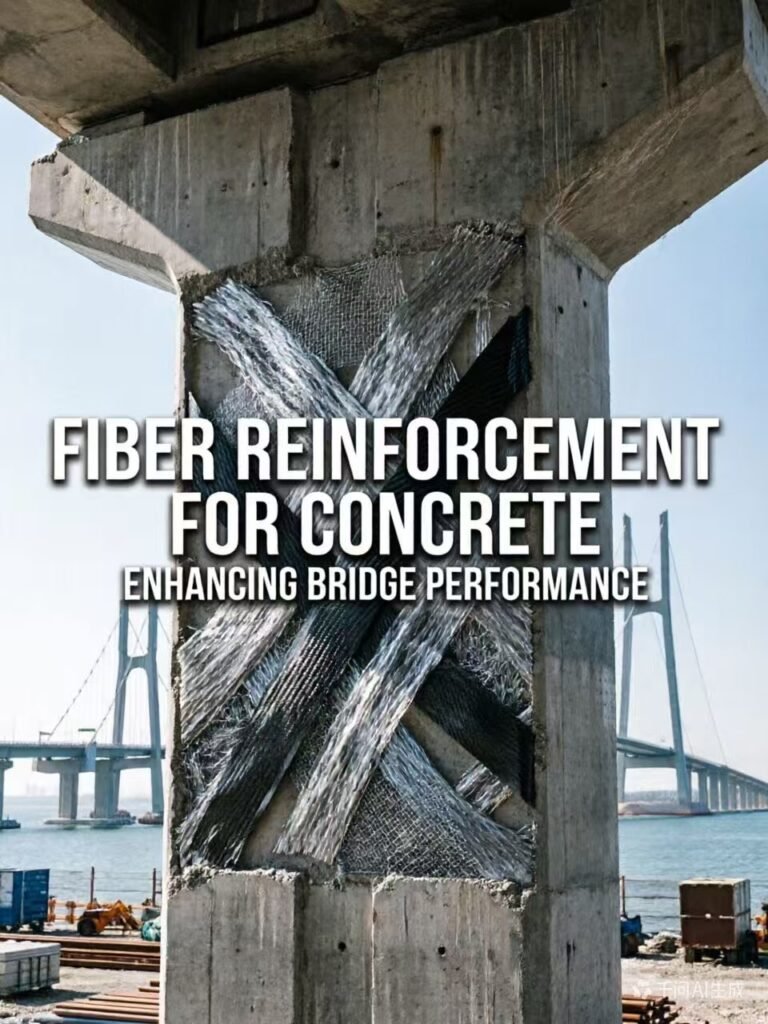


Enhancing Bridge Performance with Fiber Reinforcement for Concrete
Bridges stand as monumental testaments to human engineering, bearing the relentless loads of transportation and the unforgiving forces of nature. As infrastructure ages and traffic demands increase, the quest for materials that offer superior durability, strength, and longevity has never been more critical. In this pursuit, the construction industry has turned to a microscopic solution with macroscopic impacts: fiber reinforcement for concrete. By integrating discrete fibers into the concrete matrix, engineers are not merely building bridges; they are redefining the very fabric of structural resilience.
Traditional reinforced concrete relies heavily on steel rebar to handle tensile stresses. However, this method is not without its flaws. Concrete is inherently brittle and prone to cracking, and once cracks form, they can propagate rapidly, allowing moisture and corrosive agents to reach the steel, leading to spalling and structural degradation. Fiber reinforcement for concrete addresses these limitations by providing a three-dimensional reinforcement that bridges micro-cracks before they become macro-defects. Unlike rebar, which offers one-dimensional support, fibers are dispersed randomly throughout the mix, creating a cohesive web that enhances the material’s ductility and toughness.
The spectrum of fibers available for bridge construction is diverse, ranging from steel and glass to synthetic polymers and natural materials. Steel fibers, often in the form of fine wires or milling waste, provide exceptional tensile strength and impact resistance, making them ideal for high-stress areas such as bridge decks and piers. Glass fibers, particularly alkali-resistant (AR) types, offer high tensile strength and are often used in precast elements where surface finish and aesthetic durability are paramount. Synthetic fibers, including polypropylene and polyester, excel in controlling plastic shrinkage cracking during the curing phase, preventing the early-stage defects that compromise a bridge’s lifespan. The selection of fiber type is dictated by the specific performance requirements, environmental exposure, and budgetary constraints of the project.
One of the most significant advantages of fiber reinforcement for concrete in bridge applications is the enhancement of mechanical properties. The inclusion of fibers transforms concrete from a brittle solid into a material with strain-hardening characteristics. This means that instead of failing catastrophically upon reaching its load limit, fiber-reinforced concrete deforms gradually, absorbing energy and maintaining post-crack integrity. For bridges subjected to dynamic loads from traffic, wind, or seismic activity, this ductility is invaluable. It allows the structure to “breathe” and flex without shattering, significantly reducing the risk of sudden collapse. Furthermore, the fatigue resistance of fiber-reinforced concrete ensures that the bridge can withstand millions of loading cycles without significant deterioration.
Durability is the cornerstone of any infrastructure project, and here, fiber reinforcement for concrete truly shines. Bridges are constantly exposed to harsh environmental conditions, including freeze-thaw cycles, de-icing chemicals, and chloride ingress from marine environments. Fibers mitigate these threats by reducing the permeability of the concrete. By controlling crack width and spacing, fibers create a tortuous path that impedes the penetration of water and aggressive chemicals. This protective barrier not only extends the service life of the bridge but also drastically reduces maintenance costs. A bridge deck reinforced with synthetic fibers, for instance, is less likely to develop the spalling and scaling that typically plague traditional concrete, leading to fewer repairs and longer intervals between resurfacing.
The benefits of fiber reinforcement extend beyond the physical structure to the construction process itself. The use of fibers can often reduce or even eliminate the need for conventional steel mesh or rebar in certain applications, such as bridge decks or overlays. This streamlines the construction workflow, reducing labor costs and installation time. Workers no longer need to spend hours tying rebar cages; instead, the fibers are simply mixed into the concrete at the batching plant. This not only improves site safety by reducing congestion but also ensures a more uniform distribution of reinforcement. Moreover, the improved workability and cohesion of fiber-reinforced concrete can lead to better surface finishes and reduced segregation, ensuring a higher quality end product.
Despite the overwhelming advantages, the successful implementation of fiber reinforcement for concrete requires careful consideration of mix design and application techniques. The aspect ratio (length to diameter) of the fibers, their volume fraction in the mix, and the dispersion quality are critical factors that influence performance. Poorly dispersed fibers can lead to balling or honeycombing, creating weak spots in the structure. Therefore, collaboration between material scientists, structural engineers, and contractors is essential. Advances in technology, such as the development of fibrillated fibers or hybrid systems that combine different fiber types, are pushing the boundaries of what is possible, allowing for tailored solutions that meet the specific demands of each bridge project.
In conclusion, the integration of fiber reinforcement for concrete represents a paradigm shift in bridge engineering. It is a technology that moves beyond mere structural support to offer holistic solutions for durability, sustainability, and performance. As our global infrastructure faces the challenges of climate change and increasing urbanization, the adoption of fiber-reinforced concrete is not just an option; it is a necessity. By embracing this innovative material, we are not only building stronger bridges but also paving the way for a more resilient and sustainable future. The fibers may be small, but their impact on the longevity and safety of our bridges is monumental.