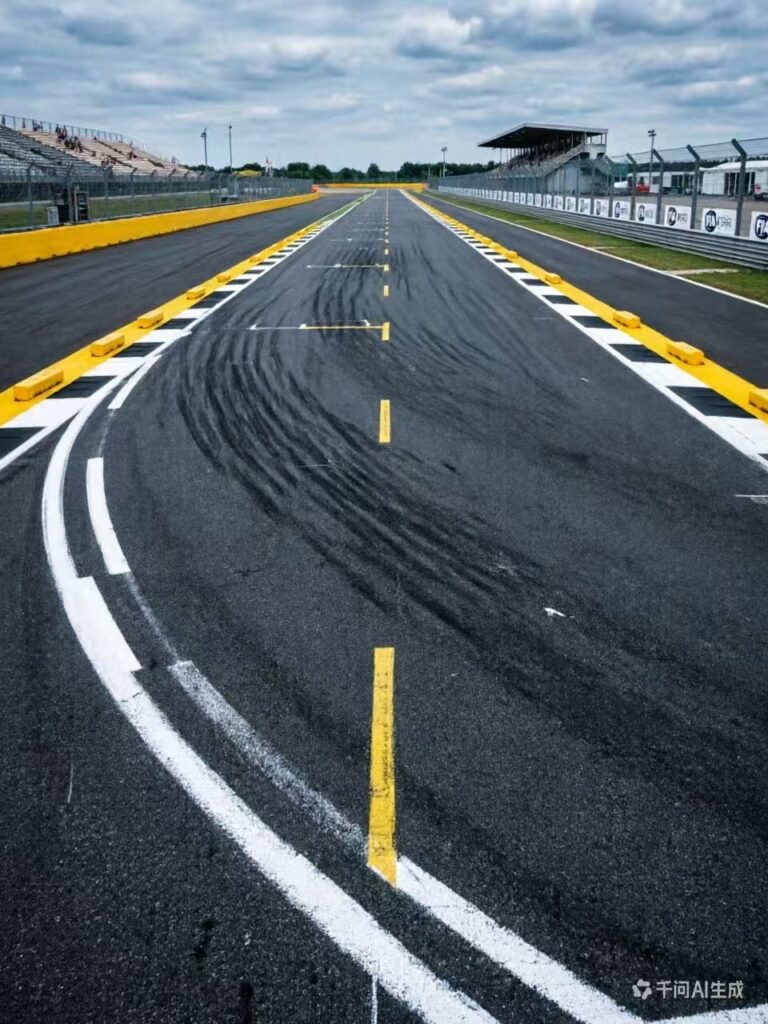


The Unseen Guardian: Asphalt Fiber and the Genesis of the F1 Track
The roar of a Formula 1 engine is often described as the beating heart of the sport, a visceral vibration that resonates through the grandstands and across television screens. However, for the driver, hurtling around a circuit at speeds exceeding 200 mph, the true interface between human ambition and mechanical reality is not the steering wheel, but the contact patch of the tire. Beneath the screeching rubber of a Formula 1 car lies a complex, engineered landscape. It is a surface that must provide maximum grip, withstand extreme thermal shock, and maintain structural integrity under loads that can exceed 5G. This surface is not merely “pavement”; it is a composite material where science meets speed. At the core of this technological marvel is an unassuming but critical component: asphalt fiber.
To the casual observer, an F1 racetrack appears to be a glorified version of a city street—a ribbon of black asphalt. However, the reality is far more complex. The track is a high-performance substrate designed to manage friction, heat, and stress in a way that standard road construction cannot match. The primary function of asphalt fiber in this environment is structural reinforcement. When a Formula 1 car accelerates, brakes, or corners, it exerts immense shear stress on the track surface. Without reinforcement, the asphalt would behave like a liquid, deforming and tearing under the tires. The addition of asphalt fiber creates a three-dimensional matrix within the bitumen (the sticky binder that holds the aggregate together). This matrix acts like the rebar in concrete, preventing the bitumen from flowing under pressure and holding the aggregate stones firmly in place. In the context of F1, this means the track does not “polish” or “shred” during a Grand Prix weekend, ensuring that the level of grip remains consistent from Friday practice to Sunday’s race.
The thermal dynamics of an F1 track are extreme. When a car locks a tire during a heavy braking zone—such as the approach to the first turn at Circuit de Monaco or the final chicane at Monza—the temperature at the contact point can spike to over 400 degrees Celsius. This intense heat radiates into the track surface, causing the bitumen to soften. If the bitumen becomes too fluid, the aggregate stones can be ejected, creating a dangerous debris field. Asphalt fiber plays a pivotal role in thermal stabilization. The fibers increase the viscosity of the bitumen at high temperatures. They act as a thickening agent, ensuring that even when the track is superheated by burning rubber and brake dust, the binder retains its structural integrity. This thermal resistance is what allows modern F1 tracks to “rubber in” effectively. As the tires lay down a layer of rubber, the stable asphalt foundation provides a perfect canvas, creating the iconic “racing line” that offers maximum grip.
Modern F1 tracks are not flat slabs of concrete. They are engineered with complex cambers, elevation changes, and specific drainage gradients. The application of asphalt on these complex geometries requires a material that is malleable during construction but rigid in service. Asphalt fiber provides this duality. During the paving process, the fiber-modified mix is easier to spread and compact, allowing engineers to achieve precise gradients and smooth transitions over hills and banking, such as those found at the Circuit of the Americas or the Red Bull Ring. Once cooled, the fiber locks the aggregate into the desired shape. This is crucial for safety; a track surface that shifts or settles unevenly would create unpredictable bumps that could unsettle a car’s aerodynamics or cause a driver to lose control at high speed. The dimensional stability provided by asphalt fiber ensures that the track surface remains true to the engineer’s original design for years, despite the relentless pounding of the fastest racing cars on the planet.
There is a delicate balance between grip and tire wear. A track surface that is too abrasive will destroy tires in a few laps, leading to a procession of pit stops rather than a race of strategy and speed. Conversely, a surface that is too smooth will offer no grip, causing the cars to slide and overheat the tires. Asphalt fiber allows engineers to fine-tune this balance. By adjusting the type and density of the fiber, the elasticity of the track can be controlled. A slightly elastic surface can absorb some of the high-frequency vibrations that cause tire blistering. In recent years, as Pirelli has supplied tires with specific thermal envelopes to the sport, the composition of the track surface—including the fiber content—has been scrutinized to ensure it complements the tire rather than fights against it. This symbiotic relationship between the asphalt fiber and the rubber compound is what allows modern F1 cars to generate such staggering cornering speeds without immediately shredding their tires.
Beyond the immediate performance of the race, asphalt fiber contributes to the longevity of the facility. An F1 Grand Prix is a massive logistical undertaking, and the host circuit must often accommodate support races, testing sessions, and other events. The durability provided by the fiber matrix means that the track requires less frequent resurfacing. This is not just a cost-saving measure; it is a sustainability factor. Fewer resurfacing projects mean less consumption of raw materials and less disruption to the local environment. Furthermore, the resistance to deformation means that water is less likely to pool on the surface during rain, aiding in the drainage that is critical for safety during wet-weather races.
In conclusion, while the spotlight rightfully shines on the drivers and the machines, the track itself is the silent protagonist of every Formula 1 season. It is the stage upon which the drama unfolds, and asphalt fiber is the invisible thread that holds that stage together. It is the element that transforms a pile of rocks and oil into a high-speed ribbon of speed, capable of gripping a multi-million dollar car at the limit of adhesion. From the thermal shock of braking zones to the sheer forces of high-speed corners, asphalt fiber ensures that the track does not just survive the onslaught of Formula 1, but enhances the performance, allowing the drivers to push the boundaries of physics with confidence that the ground beneath them will not give way.