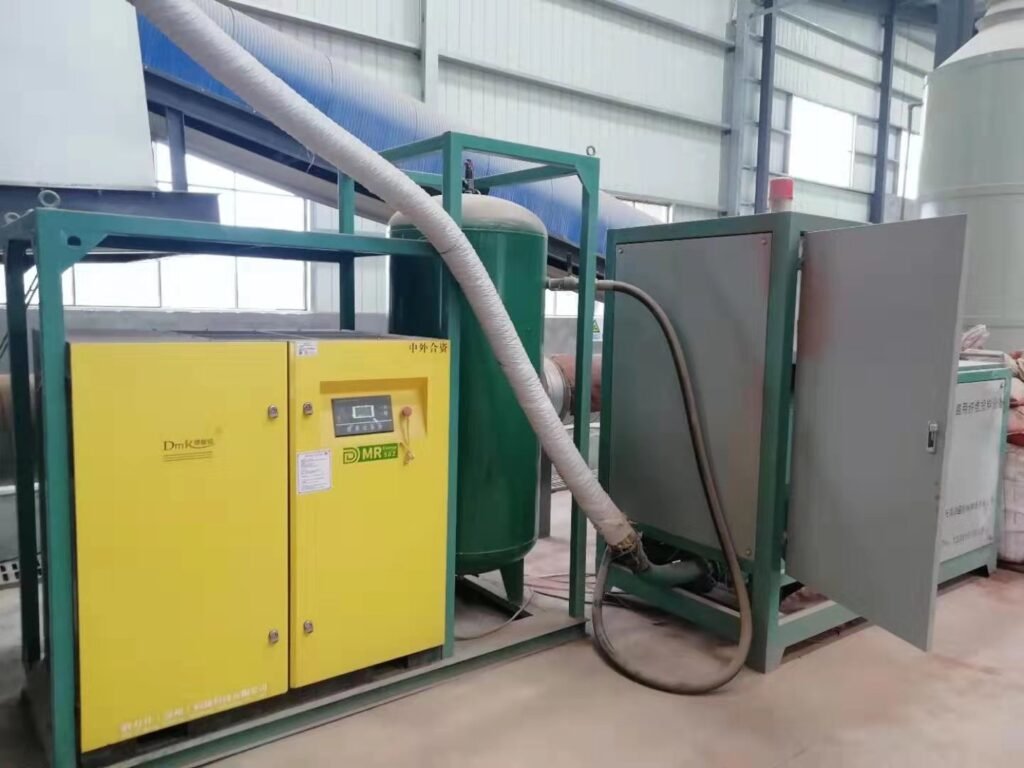


Asphalt Mix Plant Feeders are core components in asphalt mixing plants, responsible for precise, continuous metering and conveying of aggregates, fillers, fibers, and additives. Their performance directly determines mix uniformity, production stability, and pavement quality. Based on working principles, structural forms, and material handling characteristics, asphalt mix plant feeders are mainly divided into five categories: belt feeders, vibrating pan feeders, apron feeders, screw feeders, and fiber/additive feeders. Each type has distinct advantages and adapts to specific materials, production processes, and project scales.
Belt feeders are the most widely used in modern continuous and batch asphalt plants. They consist of a heavy‑duty belt, adjustable gate, variable‑speed drive, and weighing system. Flow rate is controlled by gate opening and belt speed, with high precision when equipped with electronic belt scales. They handle clean, medium‑sized, and fine aggregates smoothly, with low noise and stable output. Ideal for continuous drum mix plants and large‑capacity batch plants, they suit highway, airport, and urban road projects requiring steady high output. Their gentle handling minimizes aggregate degradation, making them preferred for graded macadam and fine‑aggregate mixtures.
Vibrating pan feeders use electromagnetic or motor‑driven vibration to move materials along a trough. They excel at feeding coarse, abrasive, or high‑moisture aggregates that may clog belt feeders. With simple structure and strong wear resistance, they are common in traditional batch plants and small‑to‑medium stationary plants. They fit quarry‑side plants processing raw crushed stone and rural road or maintenance projects with variable aggregate conditions. However, their metering accuracy is lower than belt feeders, so they are less used in high‑grade pavement requiring strict gradation control.
Apron feeders feature heavy‑duty chain‑driven plates, offering exceptional robustness for large, sharp, or highly abrasive aggregates. They operate reliably in harsh conditions with heavy impact loads, such as asphalt plants directly fed by primary crushers. Widely used in large‑scale stationary plants for mountain highways, port infrastructure, and heavy‑duty pavement, they prevent material slippage and spillage. Their high durability reduces downtime but comes with higher cost and energy use, limiting use to heavy‑duty scenarios.
Screw feeders use a helical shaft to convey powdery or fine‑granular materials like mineral filler, cement, or lime. Sealed design avoids dust pollution and ensures accurate dosing. They are essential in filler feeding systems, providing precise micro‑proportioning for mix performance. Common in all plant types, especially modified asphalt plants needing stable filler supply. They are not suitable for large or coarse aggregates due to risk of shaft jamming and wear.
Fiber and additive feeders are specialized for modifiers like lignin fiber, polyester fiber, anti‑rutting agent, and warm‑mix additive. They integrate storage, metering, pneumatic conveying, and automatic control to add small doses uniformly. Critical for modified and high‑performance asphalt used in expressways, long‑span bridges, and airport runways, they enhance rutting, cracking, and fatigue resistance. PLC‑controlled with high precision, they prevent agglomeration and ensure homogeneous dispersion.
Asphalt Mix Plant Feeders Selection depends on material type, production process, capacity, accuracy, and environment. Belt feeders balance precision and efficiency for general high‑volume use. Vibrating pan feeders handle difficult aggregates in basic applications. Apron feeders serve extreme heavy‑duty conditions. Screw feeders manage powders cleanly and accurately. Fiber/additive feeders enable high‑performance mix production.
In summary, each type of asphalt mix plant feeder plays an irreplaceable role in the asphalt mixing system. Proper classification and reasonable matching according to material properties, production scale and construction requirements can significantly improve feeding accuracy, stability and efficiency, reduce equipment wear and energy consumption, and ensure the quality and durability of asphalt mixtures. With the development of intelligent manufacturing, modern feeders are moving towards higher precision, automation and environmental protection, providing strong support for the upgrading of asphalt mixing technology.